Monday, August 22, 2011
Electric v petrol scooter
I've been reading some great posts recently at Chris Eastwood's blog in my view... . Below is a full post comparing the merits of electric and petrol scooters in a detail rarely seen.
But first a few quotes from Chris that might get you interested in some of the ideas floating around on his blog.
By having an increasingly itinerant population is it any wonder that no one gives a rats arse that your home is being degraded? (here)
I recall a conversation with 2 educators on Fraser Island ... that the last thing you want to do is encourage more people to come to national parks, even if it does somehow liberate more funding from the government it won't pay for the extra damage caused by the extra bogans. (here)
The full electric scooter post is below, and the original link here. Chris finds that the electric scooter produces more greenhouse gas emissions than the petrol version. Please keep in mind the rebound effect, since the electric scooter is so much more expensive (the owner can’t spend that money on other goods).
Over to Chris.
It’s starting to get fashionable to talk about Electric Cars again. The other day I was in at the local scooter shop the other day getting a tyre sorted out for my Yamaha T-Max scooter (and pondering a new 50cc scoot for my wife) when I spotted this electric scooter. So (being an engineering sort of fella) it is exactly in my nature to use this situation to mull over the whole thing (and present it to people who may not have thought about it).
I have been interested in the concept of an electric scooter for a while now but had not really done much research on the topic.
So since it was right in front of me I thought I'd ask some questions, take some pictures and write about it here.
I will say from the start that I like the idea of an electric scooter for city work more than petrol ones for the simple fact that most scooters are 2 strokes, stink and pollute something fierce.
India made a great move when they legislated their nasty "auto" taxis to use CNG rather than the regular 2 stroke ones of the past. Emissions fell and everyone is healthier and happier for it.
Its true that electric engines will need power from the regular power stations, which are in the main coal fired (at least in Australia). However at the very least we move this pollution to a single more efficient generation source (while introducing a number of other inefficiencies in the middle) which can be more controlled and monitored.
Before dribbling on about that too much I thought I'd toss in a comment about the rear drive on the scooter. A brush-less 48Volt 4000Watt hub mounted motor: man that means it can suck 83 amps!! wow
Which makes for some interesting observations about the changes in engineering of the swingarm and frame (because the forces are different now).
The motor can suck up to 4000 watts of energy out of your buttery but of course will only pull as much as is needed for keeping a constant speed when cruising along at a steady speed (say 50Kmh). This is of course exactly like a petrol powered motor, which sucks fuel faster when pulling power than does when cursing along. Interestingly both produce about 4000 Watts of energy (yes, 49cc scooter or electric scooter give you the same power to take off) which should come as no surprise because thats regulated by government.
[aside: to put this sort of tiddly power delivery into perspective, a "vanilla" motorcycle like a Suzuik GS500 has a motor that will deliver at least 38,000 Watts and a timid car like a Ford something like 48,000 Watts of power. So as things go the electric scooter is not pushing the engineering envelope here]
Putting energy in:
People somehow think of petrol as fuel and electricity as energy, I blame our schools for creating this schizophrenic view of reality. The reality is that fuel (petrol, gas) is energy in liquid form. We release that energy by burning it.
Motors turn that energy release into movement. The electric bike stores energy in rechargeable batteries and gets the energy to recharge the battery from your wall socket using something like this:
This little device (which is about the size of a small shoe box) is the charger for the scooter.
To charge your scooter up you have to plug this in to the wall power and into the bike. You cannot really run a long extension lead to it or you will lose power so we meet:
Problem #1 - where can I recharge
If you have your own house and garage you can probably charge it up in your garage, but if you live in an apartment its quite unlikely you have power available where you park your scooter. So you'll need to find a place where you can park it and recharge it: which takes 4 hours. In contrast the regular scooter recharges with fuel at the local servo and takes about 5 minutes to fill and pay for.
So, with fuel being (at the time of writing) about $1.5 a Liter a petrol powered scooter takes about 5L in the tank and will set you back about $7.50 to fill up from dead empty. It’s unlikely you'll run it dry, so you'll probably put in 3L at a time and walk into the servo to pay your $4 bill while grinning at the people who fill up their cars and are paying something like $60 for that.
So what does it cost to "fill up" the Electric scooter?
Well of course electricity costs, in my area right now power you pull out of the wall costs you about 19c per 1000 watts per hour. It’s normally written as Kw/H which seems to confuse people who often profess to not understand their power bill. It’s not all that had to get. Essentially if you plug in and turn on something which uses 1000W (or a kilo watt or 1Kw) and leave it turned on for an hour it cost you 19c.
So how does this apply to the Electric scooter?
Looking at the charger we see that it supplies about 900Watts to the battery. I'm certain it is not 100% efficient so let’s give it some grace and assume that it’s going to pull out 1000Watts of power from your power point in your home (or wherever its plugged into).
So (based on the above rate for power) a 4 hour charge will cost you something less than a dollar, 78c our thereabouts.
According to the information I have on the scooter (which you can verify here) For this princely sum you get to travel 90Km (only under particular conditions).
That is quite attractive. Sounds like its quite positive when reading the basics. So let’s plumb into the ownership and do a little bit of thinking:
Cost comparison
Ok, so 80 cents gets you 90Km on the scooter, but it will of course vary on how you ride and in what conditions. 90Km is of course also the maximum distance, so if you commute across town 25Km you'll not quite get two trips into the one charge (as 50 + 50 will put you out of battery) and you can't stop and top up on the way like you can with a petrol bike. The actual distance you will get may be less depending on factors like:
· hills
· number of traffic lights
· how heavy you are on the throttle on take off (kiss bye bye to fast take offs)
This means that (unless you want to be pushing it home) you'll have to top up every day (fine if you park in a garage in your home, annoying if you have a flat).
So again you'll be plugging in and paying that 80c every day instead of the potential discussed by the maker and seller of the bikes.
If you were to consider a petrol scooter (as a comparison) such as the Honda Scoopy, assuming you get something like 3l / 100Km (and some have suggested you can get 1.4L/100Km) you will pay $4.50 for that 100Km or $2.25 per day. That’s a worst case scenario too, as if you get 1.5L/100km (which is actually likely) then that'll be more like $1.12 for the trip.
Starting to look like much the same running cost as the 80c for the scooter isn't it?
Of course with the petrol version you have the flexibility that you KNOW how much is in your fuel tank, battery charge level is not as accurate and will depend on how cold it is. You can top up your fuel in minutes but need hours (back home where your charger is) to top up the electric scooter.
So this begs the question of how much is the convenience that petrol provides worth to you?
Back on the costs: an acquaintance of mine who has an electric bicycle (less power) recently changed battery from the standard one. How much? Well think in numbers closer to $1000 than $500 and you're on the path.
So unless you're after a battery for one of those tiddly little electric bicycles (with all that implies) you're thinking big money. This starts to lead into the next problem identified for the Electric Scooter and that is:
Problem #2 real operation costs:
Thinking about the above battery example, how long will your rechargeable battery last? Well its only covered by 1 year warranty. So assuming you use the battery optimally (charge and discharge according to the makers ideals) you'll certainly get a year out of it, perhaps two. But are you going to learn to do that or is convenience going to get in the way?
Consider that at the fuel prices of $1.50 /Liter (and before you say that may rise over 2 years ask yourself if power won't) you will get 20,000Km of travel from $450 of petrol.
If you travel 25Km each way to work, thats 50Km per day = 400 days of travel.
Yes, that's right ... your entire year of fuel bill will blown on a battery replacement. Which means in another way of thinking about it, that you are actually costing yourself an extra 80c a trip just for the hell of it when using an electric scooter.
Ok, but we're CO2 free right? That's got to be worth something hasn't it? Well, let me introduce you to ...
Problem #3 - CO2 generation
Its hard to get figures but it seems that (for coal powered stations) about 900g of CO2 is released for every Kw of electricity. So given that the Electric Scooter will need about 4Kw from the wall every day (using the above situational example) it will thus end up generating about 3.6Kg of C02. Of course you could run it to the edge and charge every second day (and push it home occasionally) halving that figure, but that's up to you (and pushing is good exercise).
In comparison burning petrol will release about 625g of C02 for every litre burnt, so assuming you burn 1.5 litres for your 50Km trip you'll generate about a 1Kg of C02 (Note: these calculations are based on figures for C02 in petrol from here)
so yep ... the petrol version generates less CO2 as well. It’s not looking good to me at this point ...
Naturally at this point someone will make the observation that Electric Scooters are at the beginning of their evolution and that petrol engines benefit from decades of development. Well if you have never gone to school or been taught to do any reading you may believe that line.
Let me assure you that both are quite developed technologies.
Petrol motors are actually not significantly advanced compared to 40 years ago (only we've worked on mainly curbing their emissions of other stuff) when you could buy a 70cc Honda Cub (lovely scooter) which used almost exactly the same amount of petrol as the bikes do today.
Then there is the Brushless DC motors used in the scooters, these have been in commercial use since 1886. So its mainly the battery technology which is changed to make storage more compact and perhaps controller circuits to make the motors more flexible. The basic physics of power required to move something hasn't changed between the motor types.
This does not effect the cost and pollution aspects of this calculation (except to say that modern batteries may be a more significant pollution issue than lead acid batterys).
Problem #4 - capital costs
Right now (if you look closely at the first picture) you'll see that an electric scooter equivalent to a 50cc scooter costs about $4250, while a 4 stroke *(more expensive, much cleaner burning less polluting than 2 stroke) Honda Scoopy will cost you about $2500
Yes, you did read that right, you'll pay nearly double for an equivalent electric scooter which will likely produce as much C02 (if that's of interest to you) and certainly more other significant toxic waste than will the choice of a clean 4 stroke petrol powered scooter (compared to 2 stroke motors which are quite dirty creatures).
An excellent document prepared for the Victorian Competition and Efficiency Commission (here) suggests that scooters are more effective people movers than cars are in cities. No surprise there...
To make the case even more for scooters, according to that same report: "A 2000 report (Motorcycle Transport, Powered Two Wheelers in Victoria) by transport researcher, Professor Marcus Wigan, found that motorcycle riders were the only transport mode to indicate no time delays as part of a trip."
There are articles available written to counterpoint this blog post (such as this one) where they suggest that Electric bikes are better than petrol powered ones. It’s worth noting that these are largely written by people who actually sell the electric alternative (but not the electricity).
It’s interesting to note that in the post I cited above the author makes the comparison between a electric bicycle and a postie bike (Honda CT110). The CT110 is a work horse, it'll carry another 40kg of mail and still accelerate and travel at 60Kmh if you desire, but the author makes a disingenuous comparison with an electric bicycle (which only carries you and you have to pedal too) comes out on top (when he ignores the battery issue). Yet the bicycle has a motor which wouldn't have enough power to pull the skin of a custard when compared to a postie bike ... gosh, bet that'll be popular on the farm!
But what about Solar charging? That would be CO2 free...
Well that's a good point. If you were to get a 1.5 Kw system it would likely produce enough energy on a good day to charge your scooter (if you left it at home) within 5 hours (you don't get 1.5Kw all the time out of them, ask someone who owns one). So for the additional investment of $2500 (around about and you won't be back feeding the grid while your charging) you can be comfortable in the knowledge that you won't pay that extra 80c a day (but you'll still pay the other costs)
So that's $4200 for the scooter, and $2500 for the solar charger system (no rebate on that one) taking your investment to $6700 for a system which needs you to leave the bike home during the day for charging ... sounds great to you too?
So in summary:
It seems like the following to me
· I will save a little per trip (about 80c for a 50Km trip vs $1.25)
· but I pay double to purchase ($4200 vs $2500)
· unknown depreciation losses (but it’s fair to say you can't lose more than $2500 on the petrol scooter)
· pay more for operational costs (the battery will die)
· actually create more pollution in almost every way by using an electric scooter over a petrol one.
· You have to be able to park it where you can charge it (in a secure place or risk getting your charger stolen)
· if your running low in power on the way home you cannot just stop in to a servo to top up.
Why are you buying the scooter? Economy? Environmentally friendly?
The bottom line is if you want to be really environmentally friendly, go get a 50cc to 110cc 4 stroke scooter stop driving your car and help save the world’s atmosphere and resources.
Sunday, August 14, 2011
Recycling Jevons Paradox
Wednesday, June 1, 2011
Queensland’s Strategic Cropping Land
I have been critical about the farming lobby’s reaction to the Murray-Darling Basin Plan, and I have also been very critical about the value of food security, especially when used as a justification for agricultural subsidies.
My general belief is that farmers should be treated like any other business and face risks from their investment decisions. Because this belief I strongly support Queensland’s new Strategic Cropping Land Policy.
The policy under development gives farmers a chance to opt out of mining and gas production on their land. Currently land owners must allow mineral and gas exploration and development on their land. The mining industry has legislative power behind it to explore for, and mine, the States mineral resources (have a look at your title deed and you will note that even freehold land owners don’t own the minerals under their land).
This means that miners do not need to buy any property rights from existing land owners to conduct activities on privately owned land. They do however need to provide some compensation for disruption to activities (as prescribed under the relevant acts).
In the greatest of ironies, agricultural policies in this country have protected farmers from their own business decisions (eg. subsidising water supplies, making drought and flood payments - I argue these events are part of the natural weather cycle and should be anticipated), yet have not protected farmers from external threats to from mining.
It took a while for the food security lobby to realise that the food production of the country rests in the land, soil and water, not in the individual businesses of farmers. If a farm business fails, the productive capacity remains for the next buyer of the property. But if land, soil and water is irreversibly damaged, then potential food production capacity is destroyed.
With these bizarre policies in place it is possible to have the situation where a farmer is receiving drought relief payments on the one hand to save his business, while the government is supporting the demise of his ability to farm on the other hand by allowing coal seam gas wells to be peppered across his fields.
In the Darling Downs the preservation of the water quality in underground aquifers is especially important. These aquifers are a significant source of water for agriculture and there is a reasonable probability that drilling through this aquifer many thousands of times to reach the deeper coal seam will contaminate the water. And unlike a river system which flushes water readily, underground aquifers may take hundreds of years to recover (or water users will need to treat the now contaminated water before applying to crops).
The irreversibility of mining and coal seam gas impacts is one of the key reasons that farmers should be given some ability to opt out of such activities on (or even near in some cases) their land.
The outcomes from this type of policy should satisfy a broad range of interests.
1. Land use conflicts are more easily resolved by given some powers back to existing land owners.
2. By protecting the land itself those who want food security and local food produce benefit.
3. Those who want ‘agricultural open space’ benefit (people actually like knowing there are farming communities and driving through the country).
4. Farmers who want to be free to run their own business, protected from irreversible land damage benefit.
5. Those who want mining can do so if the impacts on surrounding land owners are sufficiently low.
Of course there will be problems to overcome during implementation, but in principle the policy appears sound. An indeed, the minerals and gas remain in the ground should future circumstances require their extraction.
Wednesday, November 3, 2010
Talking climate with Warwick McKibbin
Some of the critics of the implementation of Australia's fiscal stimulus fail to see the broader political picture. Professor Tony Makin, for example, argued that the fiscal stimulus was not necessary because adjustments in exchange rates and interest rates absorbed most of the impact of the crisis. Yet he gives no credit to domestic impact of fiscal stimulus from abroad, particularly with our main trading partners. His argument was that we should have been free riding on the stimulus of other nations.
Yet this type of problem exists with all macro-economic models, where data is usually sparse and unreliable, and you make do with the best you have at the time. But interpreting the results knowing the shortcomings is especially troublesome.
Wednesday, October 20, 2010
No limits to economic growth
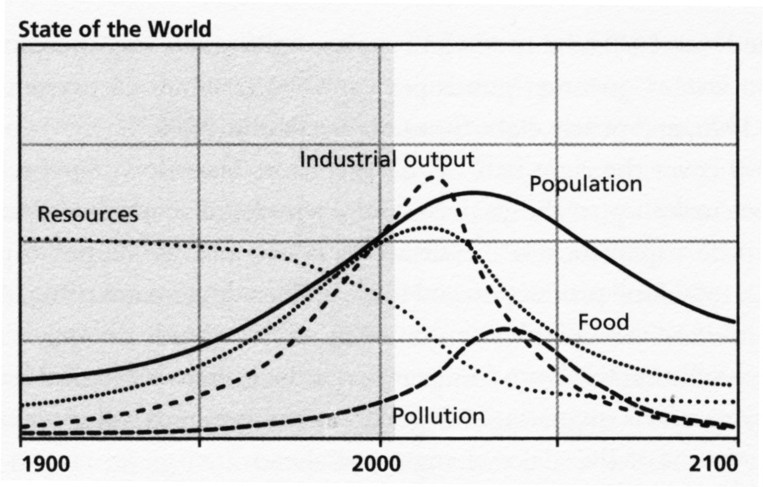
While I don’t doubt the finitude of many natural resources, and that the human population cannot grow indefinitely, I doubt that finite limits of resource inputs to the economy necessarily means that economic growth cannot continue indefinitely.
To be sure, I am certain that substantial unforeseen changes to the rate of extraction of some resources will lead to short-term disruption of established production chains, such as shocks to oil supply, but in the long run I see no reason that an economy with finite resource inputs cannot increase production through improved technology and efficiency.
I need to be clear that when I talk of economic growth I mean our ability to produce more goods and services that we value for a given input. Increasing the size of the economy by simply having more people, each producing the same quantity of goods, will be measured as growth in GDP, but provides no improvement in the material well being of society.
A better measure of growth is real GDP per capita. This adjusts for the disconnection between the supply of money and the production of goods, and adjusts for the increase in scale provided by the extra labour inputs. Even then, this may overestimate the rate of real growth occurring, as there has been a trend of formalising much of the informal economy, for example child care, which is now a measured part of GDP rather than existing as individual family arrangements.
On these adjusted measures economic growth is a very slow process. In a world where non-renewable resource inputs are fixed or declining, it is the rate of the decline and the speed of adjustment that will determine the overall outcome for our well being. If the rate of decline of non-renewable resource inputs is below the rate of real growth (our ability to produce more with less) and the rate at which we can substitute to renewable alternatives, we can avoid economic calamity in the face of natural limits.
Unfortunately there are other factors at play.
The rate of population growth will greatly determine the per capita wellbeing in a time of limited growth. While extra labour input will no doubt contribute to production inputs, my suggestion is that this input will be outweighed by a decline in complementary resource inputs. Remember, we care about real economic ‘wealth’ per capita, and with more people there is a smaller share of remaining resources each person can utilise in production, thus reducing wellbeing.
Further, we can begin to take productivity gains as leisure time instead of more work time, thus there is a possibility of maintaining a given level of production in the economy with fewer labour inputs over time.
There is also the reliance of our financial system on high levels of growth. Many economic growth critics cite the need for exponential growth of financial measures of the economy as being in conflict with any finite system. Yet the ‘system’ itself is a human construction and I seen no reason why a stable money supply cannot operate under various levels of growth (even prolonged negative growth) if used cautiously and with little leverage.
Often forgotten is that many resources are currently fixed and yet go unnoticed. There are always 24 hours in a day, but that doesn’t stop us producing more each day. If a shortage of hours was encountered, would a sudden change to 23hrs (a 4% decline) have a dramatic impact? Or would society easily adjust to this new environment of tighter time scarcity?
While a smooth transition to prosperity under much greater limits on resource inputs to the economy is theoretically possible, I don’t expect this to be our future reality. Self interested governments, businesses and the general public will react to short term shocks in unexpected ways, potentially promoting conflict, and taking the bumpy road. I have no doubt that there will extended periods of prosperity in the future, but also expect a rough ride to get to them.
Wednesday, October 13, 2010
Murray-Darling Basin Plan: Despite extreme lobbying, you can’t take water that does not exist
My point is, people are taking the cuts as real water then multiplying impacts to flow on industries then getting bigger and bigger impacts that border on ridiculous. These complementary agricultural industries are clearly already adjusted to any proposed cutbacks.
Monday, September 27, 2010
Too good to be true environmental solutions
Sunday, September 19, 2010
Flow-on effects of recycling - are there net benefits?
Like efficiency, the word recycling reflects positivity from all angles. How could anyone say a bad thing about recycling?
I propose not to say a bad thing for the sake of cementing my identity as a super-sceptic, but to examine in detail the potential flow-on effects of recycling and determine whether the espoused benefits can theoretically be delivered.
Generally two benefits of recycling are proclaimed. First, waste will be diverted from landfill, thus we can reduce the space required for this purposed and reduce the threat of leaching from landfill sites into groundwater systems and other environments. Second, recycled material will substitute for raw materials and thus reduce consumption of natural resources which may have associated negative environmental externalities.
These are two distinct benefits, and achieving one does not necessarily imply achieving both.
There are also two different economic scenarios for achieving recycling with different outcomes – the profitable recycling scenario, and the unprofitable recycling scenario that requires government support.
The profitable scenario represents an improvement in overall economic efficiency, thus, like the case of profitable energy efficiency, it facilitates future economic growth and improves our productive capacity.
In this scenario, recycled material cannot be said to be diverted from land fill, because it would never have been put there in the first place due to the material’s value to remanufacturing. If the material was simply dumped on the street there would be an opportunity for a business to emerge to collect the material and sell for a profit. Without a counterfactual we cannot estimate the effect on either of our two recycling claims.
If we assume instead that the counterfactual scenario is one where the technology had not yet emerged to make recycling profitable, then we can now consider the flow-on effects from the technology. It is best to have a single material in mind, say glass, when thinking of these effects.
First, the price of the final goods (windows, bottles etc) using the newly recyclable material will decline due to the reduced cost of recycled instead of raw materials. Thus we will see an increase in demand (not a shift in the demand curve, but a new point on the demand curve at a lower price) for these final goods and therefore an increase in demand for recycled and/or raw materials (recycled glass or silica from natural sand deposits). Depending on the availability of recycled material compared to the total quantity of raw materials, this can lead to greater demand for natural resource itself (sand mining).
We can now say we have probably diverted waste from landfill leading to a greater quantity of material circulating in the hands of society (as either capital equipment – glass in buildings perhaps- or soon to be recycled consumables – maybe bottles), but we cannot say with certainty that the new recycling technology has reduced demand for the particular natural resource in question. Nor can we say that demand for, and consumption of, other natural resources remains unaffected. In fact the new recycling technology, since it improved overall economic efficiency, is likely to increase demand for all natural resource inputs to the economy.
The alternate unprofitable scenario represents a decrease in overall economic efficiency, and will reduce overall economic activity compared to scenario where government did not use its coercive power to enforce this unprofitable venture.
In this scenario we are likely to see a decline in waste to landfill compared to the economically efficient situation where recycling is not subsidised. We face the same situation of compensatory demand due to price declines of final goods manufactured using the cheaper subsidised recycled materials. This scale of this offsetting behaviour cannot be readily estimated and is likely to strongly depend on the relative prices and quantities of the recycled materials and raw material inputs are a particular point in time. A decline in overall demand for raw materials in the economy as a whole is certain in the unprofitable scenario due to the overall reduction in economic efficiency.
For unprofitable recycling the net result will be a reduction in waste to landfill of both the recycled good and other goods (since we can now produce fewer goods in total across the economy), and a reduction in resource consumption of the recycled material and all other resource inputs to the economy.
In what is becoming a familiar environmental theme at this blog, it should be clear that indirect measures to curb negative environmental impacts from our activities, such as promoting conservation behaviours, profitable energy efficiency, and recycling, have questionable net impacts on the environmental issue at hand.
Returning to our two main environmental goals of recycling – reduce negative impacts form landfill sites and reduce resource extraction that involves an environmental burden – we can clearly offer more direct measures which are both easy to establish and have certain environmental benefits.
The first environmental goal can be achieved by setting minimum environmental standards for landfill sites to address leaching (or any other associated problem depending on local conditions) including, perhaps, restrictions on location. In response to these criteria, landfill operators (public or private) would need to adopt appropriate measure to limit external impacts – possibly lining their pits with impermeable material, sorting, washing or removing particular types of waste, or some other creative response. These extra costs of waste disposal – the internalised environmental cost – will flow through to the cost of disposal, and may render some recycling programs profitable.
For the second environmental concern, resource extraction, similar direct controls can be used. Sticking with the glass example, the scope of sand mining can be limited through planning controls where natural environments which are valued by the community. Once this limit is established, sand mining in that area can proceed, at any particular rate, with certainty that there is a finite limit to the environmental cost.
These limits would never be, strictly speaking, perfect. They would at best reflect the perceived value of the environment to the community. There is no reason that the limits should not be stricter in some areas than others.
As an indirect environmental measure with questionable benefits, recycling, like efficiency, is claimed to be a panacea for a variety of poorly defined environmental ills. We often forget to critically examine the link between this indirect environmental ‘remedy’, and the target environmental illness.
Tuesday, September 14, 2010
Energy efficiency - further reading
Brookes also adds taxing resources to reflect the cost of negative externalities, which one assumes, would be spent on reparation activities to return to a new optimal resource allocation which internalises the cost of pollution and eliminates the possibility of rebound effects (if reparations are possible).
It is worth reading his conclusions in full (below the fold):
Wednesday, September 8, 2010
Energy efficiency: A flawed paradigm
UPDATE: Recommended reading - The Jevons Paradox and the Myth of Resource Efficiency Improvements.
Tuesday, May 4, 2010
Steve Irwin's way: Economics of wildlife conservation
Tuesday, February 9, 2010
Food packaging less wasteful than none at all!
I do however believe that some packaging, such as the excessive size of cereal boxes to ensure good shelf space, does not always result in benefits for consumers.
Thursday, March 12, 2009
Tuscany v Tassie
Then I consider the wild areas of Tasmania and New Zealand. My Dad is a fan of this environment, hiking the tracks in the fresh mountain air, with none of the bustle of city living. But even in this environment, humanisation (for want of a better term) is occurring. Huts are built. Tracks are formed on the side of steep ravines, and fallen trees are transformed in to nifty seating for a weary wanderer.
When I go camping, it is partly to get closer to nature, but in doing so I change it. I instinctively humanise the landscape as I go - remove fallen branches to make some nice open space, forge a track through to the beach, and make a fire place. I want to go out to nature, but then subconsciously change it as soon as I get there. The result then, for me at least, must be better than the landscape in its original form.
At this moment I believe there must be an instinctive desire to humanise our environment, whether we value natural environments or not. But how does this impact our lives in contemporary urban society?
One important thing that springs to mind is that this humanising desire explains why people apparently ‘over value’ design. I live on the darkside with a Mac laptop. Yes, in my opinion it is more functional, but I must admit, in the beginning, the design really appealed. When the initial decision was made, I simply paid for looks. It was humanised.
More specifically, does this kind of desire explain the premium people are willing to pay to own their own home? Yes, home ownership is more secure, but does security explain the massive premium people are willing to pay? Or does the ability to customise, to humanise, to personalise our space contribute to this willingness to pay? I don’t know; it is just a suggestion.
To put the whole thing in reverse, would there be outrage at the suggestion that you couldn’t personalise your office space at work? Would a premium be paid for home ownership if regulations forbade different colour paint, renovations or extensions, and no changes to the garden?
Then again, maybe I’ve picked up on something that is explained by deeper causes and possibly has an evolutionary explanation.
Wednesday, January 21, 2009
Down the rabbit hole
I can't quite get my intuition around this counter-intuitive concept. I'd like to try to develop some points that still bamboozle me:
1. Equating dollars to energy: For the purposes of example let's make up an economy, let's call it Moldova, which is powered 100% by coal-fired power plants. Say Moldova is a pretty dodgy place and the coal-fired power plants are running break even: so it costs the same amount of Mol-dollars to produce the energy as what they sell it for. Intuitively we would expect that this system could work; that the Moldovians, however poor they may be, would have electricity. However if we substitute the words coal-fired power plant with solar panels it becomes impossible. In both examples the cost of production equals the price of their product. It's easy to understand that if in the process of creating the solar panel we require the same amount of electricity than it produces over it's lifetime we gain nothing since we can easily equate apples with apples. However when we equate dollars with energy, one dollar spent on buying a solar panel (e.g. $1 = 1Wh) only produces 1Wh back again we gain nothing from the process. Thinking this way, equating $ with Wh, how can our poor Moldovians still use their electric milking machines?
2. I'm trying hard not to believe that we gain nothing from buying solar panels. Assuming they cost (like in Moldova) the same as the value of the energy they produce. We spend a dollar on a solar panel: this dollar in infinitely divided as it swims upstream through peoples wallets, and through this process looses it's identity as my 'green' dollar and comes out representing the total resource inputs of our economy, probably more a brownish sludgy colour now. So it doesn't matter if I temporarily green wash my dollar or spend it to create a burning petrol feature-fountain in my front yard: it's all the same. However I reckon by buying a solar panel I change the resource inputs of our economy: so my dollar swims up a slightly altered stream, it still arrives a brownish sludgy dollar, but a slightly greener one.
However after my solar panel is online, the total resource pool of the economy increases, energy becomes cheaper and consumption increases to fill in the space my green dollar bought: so total polluting is not reduced. Arrghh! I thought I was arguing for solar panels!! damn. BUT.. if the federal government wants to stimulate the economy they should spend it on solar panels? Since they would be growing the economy without increasing pollution. I've lost my point. Anyway what do you think?
Cheers
Chris.
My response:
Chris. You have some very neat logical arguments here. And there is no real answer to the first one. I have been pondering this problem for about a year. I get the feeling we are getting very close to the bottom of the rabbit hole, with only one remaining theoretical explanation. Chaos! (complex adaptive systems to be more precise)
While I have given the impression that tracing resource inputs to the economy up the tree can be envisaged much like a never ending family tree, there are interactions along the way that make it a complex system, and the capacity to learn and change also makes it adaptive. There are two major problems with such systems; (1) an action cannot be isolated from the rest of the system (thus one product cannot be isolated as good or bad), and (2) the way to change the whole system is uncertain, given the complexity of actions in response to change within the system.
Further, there are major problems in my theoretical argument against solar panels due to time and technology. For starters, the energy we used to construct the power plant was from half a century ago, which came from power plants and oil wells built a century ago, which were constructed from… well you get the picture (maybe read my Hunger, humans or happiness blog). Without this previous energy use, we would not have current energy production. Thus we could arguably trace back infinitely through time the energy requirements of producing a given product, which may be a sum total of all energy use in history!
In light of these and other issues that arose in lunchroom economics discussions, I developed a ‘Theory of Private Property’, which suggests that somehow economic growth (but not human welfare) is fundamentally linked to the creation of private property. How to develop this into a comprehensive and useful theory presently escapes me, but I am yet to find contrary evidence to dispute the relationship. The point of such a theory would be to suggest that solar power cannot contribute to growth because it doesn’t involve the use of land (whereas fossil fuelled energy can due to the continued consumption of land in the form of coal or oil). If we could attach a right to the sunshine, it may help. The solar energy producers would pay rents on the rights to the sunshine.
Anyway, while that was not a short answer, it does begin to raise some important points that one might consider before proclaiming a specific behaviour as good or bad.